If you want warmth and comfort, scuba fabric delivers. Its thick, Soft Solid Dyed Knitted texture keeps you cozy and shields you from chilly winds. You will not enjoy this fabric during hot days because it traps heat. Choose scuba fabric for colder months to stay comfortable and stylish.
Key Takeaways
- Scuba fabric keeps you warm and cozy, making it ideal for fall and winter, but it traps heat and feels too warm for hot summer days.
- To stay comfortable in summer, choose sleeveless or loose scuba fabric styles with open necklines and ventilation to reduce overheating.
- Layer scuba fabric with fleece or wool in cold weather for extra warmth, and enjoy its stretch, moisture-wicking, and wrinkle-resistant features year-round.
Scuba Fabric Properties
Breathability and Airflow
You want a fabric that lets your skin breathe. Scuba fabric offers some breathability, but it does not match lighter materials like cotton. The structure of scuba fabric allows for moderate airflow, so you stay comfortable during short activities. If you wear it in warm weather, you may feel warm quickly. For moderate summer days, you can wear scuba fabric without feeling too hot, but it is not the best choice for heat waves.
Heat Retention and Insulation
Scuba fabric keeps you warm by trapping heat close to your body. This makes it perfect for cold days. Take a look at how scuba fabric compares to other insulating materials used in diving suits:
| Factor | Drysuit | Wetsuit |
|---|---|---|
| Water Entry | Completely prevents water entry, keeping the body dry | Allows water to enter, which is warmed by the diver’s body temperature |
| Insulation Mechanism | Traps insulating air layer inside, often with added insulation/heating | Relies on body heat to warm the water layer inside the suit |
| Suit Material | Typically neoprene with additional insulation or heating systems | Usually neoprene or rubber, thickness varies for insulation |
| Effectiveness in Cold | Highly effective; suitable for water below 10°C (50°F) | Less effective; insulation limited in extremely cold water |
| Thermal Retention | Excellent; slows heat loss significantly | Moderate; depends on body heat and water temperature |
| Usage Recommendation | Preferred choice for cold or extremely cold water diving | Suitable for warmer waters; not recommended for extremely cold environments |
You get excellent heat retention with scuba fabric, so you stay cozy even when the temperature drops.
Moisture Management
You want to stay dry and comfortable. Scuba fabric wicks moisture away from your skin and dries quickly. This helps you avoid feeling sweaty or sticky, whether you are active in winter or enjoying a mild summer day. The fabric regulates temperature well, so you do not overheat during exercise or chill during rest.
Thickness and Stretch
Scuba fabric feels thicker than most activewear. You get more insulation, which is great for layering in winter. The fabric stretches easily, so you move freely and stay comfortable. You also get shape retention and opacity, which means your clothes look good and last longer. Here are some benefits:
- Scuba fabric works well as a middle layer in winter.
- You enjoy excellent moisture-wicking and quick-drying features.
- The fabric balances warmth, breathability, and comfort.
- You can wear it alone in moderate summer weather.
You get style and function all year round.
Scuba Fabric in Summer vs. Winter
Comfort in Hot Weather
You want to stay cool when the sun beats down. Scuba fabric feels thick and holds heat, so you may get warm quickly. The double-knit structure traps warmth, which makes it less comfortable on hot days. You might notice sweat building up, especially if you wear full-coverage styles. Lighter blends help, but you still need to choose your outfit wisely. If you pick sleeveless tops or open-back dresses, you allow more air to flow and reduce overheating. You can enjoy the moisture-wicking feature, but you must style for ventilation to stay comfortable.
Tip: Choose loose-fitting scuba fabric pieces with open necklines for better airflow during summer.
Comfort in Cold Weather
You want warmth and protection when the temperature drops. Scuba fabric gives you a smooth, stretchy feel and shields you from wind. You get durability and some insulation, but fleece and wool offer more warmth. Wool keeps you cozy and breathes well, while fleece feels soft and traps heat better. If you compare, you find that scuba fabric works for mild cold, but fleece and wool win in harsh winter. You can layer scuba fabric for extra comfort, but you may prefer fleece or wool for outdoor activities in freezing weather.
| Fabric Type | Warmth Level | Breathability | Best Use |
|---|---|---|---|
| Scuba fabric | Moderate | Low | Mild cold, layering |
| Fleece | High | Moderate | Cold climates |
| Wool | Very High | High | Winter, outdoors |
Tips for Wearing Scuba Fabric in Summer
You want to look stylish and stay cool. Try these tips to maximize comfort:
- Pick sleeveless tops or dresses with open necklines for better airflow.
- Choose skirts with flared or A-line shapes to let air circulate.
- Select pieces with cut-outs or open backs to boost ventilation.
- Go for lighter blends or thinner versions of scuba fabric.
- Avoid full-body coverage to prevent overheating.
- Wear a light tank top underneath to reduce stickiness from sweat.
- Use the moisture-wicking and quick-drying features to manage sweat, but focus on styles that keep you cool.
Note: Styling for airflow is essential because scuba fabric retains heat.
Tips for Wearing Scuba Fabric in Winter
You want to stay warm and comfortable. Use these layering techniques for the best results:
- Start with a snug base layer made from quick-drying, breathable material to wick moisture and keep you dry.
- Add an insulation layer, such as fleece, over your base to trap heat.
- For very cold days, layer two scuba fabric pieces of different thicknesses.
- In moderate cold, wear a single scuba fabric garment with an insulation layer underneath.
- Adjust your layers based on temperature, wind, and activity level.
- Protect your hands, feet, and head with gloves, boots, and hats to prevent heat loss.
- Make sure all layers fit comfortably and allow you to move freely.
Tip: Layering with fleece or wool under scuba fabric boosts warmth and comfort during winter.
Scuba Fabric Compared to Other Seasonal Fabrics
Summer Alternatives
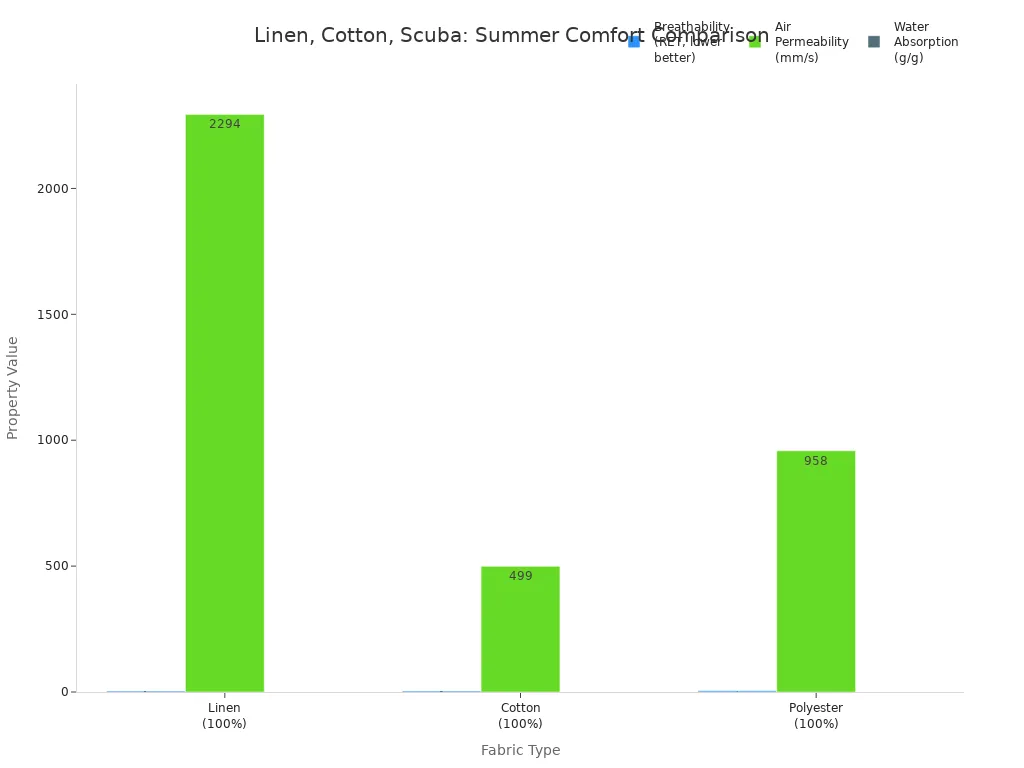
You want to stay cool and comfortable in summer. Choose fabrics that let your skin breathe and wick away sweat. Cotton and linen stand out as top choices. They offer high breathability, quick moisture absorption, and a soft touch. You get a fresh feeling even on the hottest days. Take a look at how these fabrics compare:
| Fabric | Airflow | Moisture Wicking | Structure | Best For |
|---|---|---|---|---|
| Cotton | High | Good | Soft | Everyday summer wear |
| Linen | Very High | Excellent | Crisp, light | Hot, humid climates |
| Scuba Fabric | Moderate | Good | Structured | Statement pieces, style |
Linen gives you the best ventilation and dries fast. Cotton keeps you dry and feels gentle on your skin. Scuba fabric, with its double-knit structure, traps more heat and allows less airflow. You may feel warmer in it during summer. For hot days, pick sleeveless or loose styles if you want to wear scuba fabric.
Tip: Natural fabrics like cotton and linen are also better for the environment. They come from plants and break down naturally, unlike synthetic options.
Winter Alternatives
You need warmth and insulation in winter. Merino wool and synthetic blends give you excellent protection from the cold. Merino wool keeps you warm, wicks away moisture, and resists odors. Synthetic fabrics, such as polyester blends, dry quickly and last for many seasons. These options work well for layering and active use.
| Fabric Type | Warmth | Durability | Drying Time | Additional Features |
|---|---|---|---|---|
| Merino Wool | High insulating warmth | Less durable | Slower drying | Moisture-wicking, odor-resistant |
| Synthetic Fabrics | Moderate warmth | Highly durable | Quick drying | Breathable, quick-dry |
| Merino-Synthetic Blends | Warmth between wool and synthetics | Improved durability | Moderate drying | Combines benefits of both fibers |
Scuba fabric stands out for its structure and support. Its thickness and double-knit design trap air, keeping you warm in mild cold. Polyester and spandex make it durable and flexible, perfect for activewear. However, for extreme cold, merino wool offers superior insulation.
Note: Choose merino wool or blends for the best warmth and comfort in winter. Use scuba fabric for style and layering in milder cold.
You want warmth, style, and easy care in your wardrobe. Choose this fabric for fall and winter because it keeps you cozy, stretches for comfort, and resists wrinkles. In hot weather, you may feel too warm or sweaty. For most people, this fabric works best in cooler seasons.
FAQ
Can you wear scuba fabric in hot weather?
You can wear scuba fabric in summer if you choose sleeveless or loose styles. Pick lighter blends for better comfort.
Tip: Always style for airflow to stay cool.
Is scuba fabric easy to care for?
You enjoy easy care with scuba fabric. Machine wash cold and hang dry for best results.
No ironing needed—wrinkle resistance keeps your look sharp.
Does scuba fabric stretch and hold its shape?
You get excellent stretch and shape retention. Scuba fabric moves with you and keeps its structure, so your clothes look new longer.
Note: Perfect for active lifestyles.